Quick Answer: Stamped concrete mimics the look of stone or brick but can crack in Tacoma's wet climate and is costly to repair. Patio coatings applied by a Tacoma WA concrete coating company like TSR Concrete Coatings offer a durable, customizable, and low-maintenance alternative that holds up better year-round in the Pacific Northwest.
Tacoma homeowners invest a lot in their outdoor spaces. A well-finished patio adds curb appeal, extends your living area, and boosts property value. But when it comes to choosing the right surface treatment, two options tend to dominate the conversation: stamped concrete and patio coatings.
Both have their merits. Both have their drawbacks. And in Tacoma's unique climate—with its wet winters, mild summers, and frequent freeze-thaw cycles—the right choice matters more than most people realize. Get it wrong, and you could be dealing with cracking, fading, or costly repairs within just a few years.
This guide breaks down the key differences between stamped concrete and patio coatings, helping you make a confident, informed decision for your Tacoma home.
Key Takeaways
- Stamped concrete offers an attractive aesthetic but is prone to cracking and difficult to repair in Tacoma's rainy climate.
- Patio coatings deliver lasting durability, slip resistance, and design flexibility with far less maintenance.
- TSR Concrete Coatings, a trusted Tacoma WA concrete coating company, specializes in high-performance coatings built for the Pacific Northwest.
What Is Stamped Concrete?
Stamped concrete is poured concrete that gets textured and colored before it sets, creating patterns that mimic materials like slate, flagstone, brick, or wood. The results can look stunning—at first.
The process involves pressing molds into fresh concrete and adding color hardeners or stains to achieve a natural stone appearance. It's a popular choice for patios, pool decks, and driveways because of the visual payoff.
The catch? That visual appeal comes with real maintenance demands, especially here in Tacoma.
Why Stamped Concrete Struggles in the Pacific Northwest
Tacoma receives roughly 38 inches of rain per year. That persistent moisture, combined with occasional freezing temperatures, creates conditions that are hard on stamped concrete surfaces.
Here's why:
- Cracking: Concrete expands and contracts with temperature changes. Stamped patterns don't include the same control joints as standard slabs, which means cracks are more likely—and harder to repair without ruining the design.
- Sealant upkeep: Stamped concrete needs resealing every 2–3 years. Skip it, and the color fades, the surface becomes slippery when wet, and water starts seeping in.
- Repair difficulty: If a section cracks or chips, matching the original stamp pattern and color is nearly impossible. Even professional repairs often leave visible seams.
For a climate as wet as Tacoma's, these aren't minor inconveniences—they're ongoing costs.
What Are Patio Coatings?
Patio coatings are polymer-based surface systems applied directly over existing concrete. Rather than replacing your slab, a coating bonds to the surface and creates a new, durable finish on top.
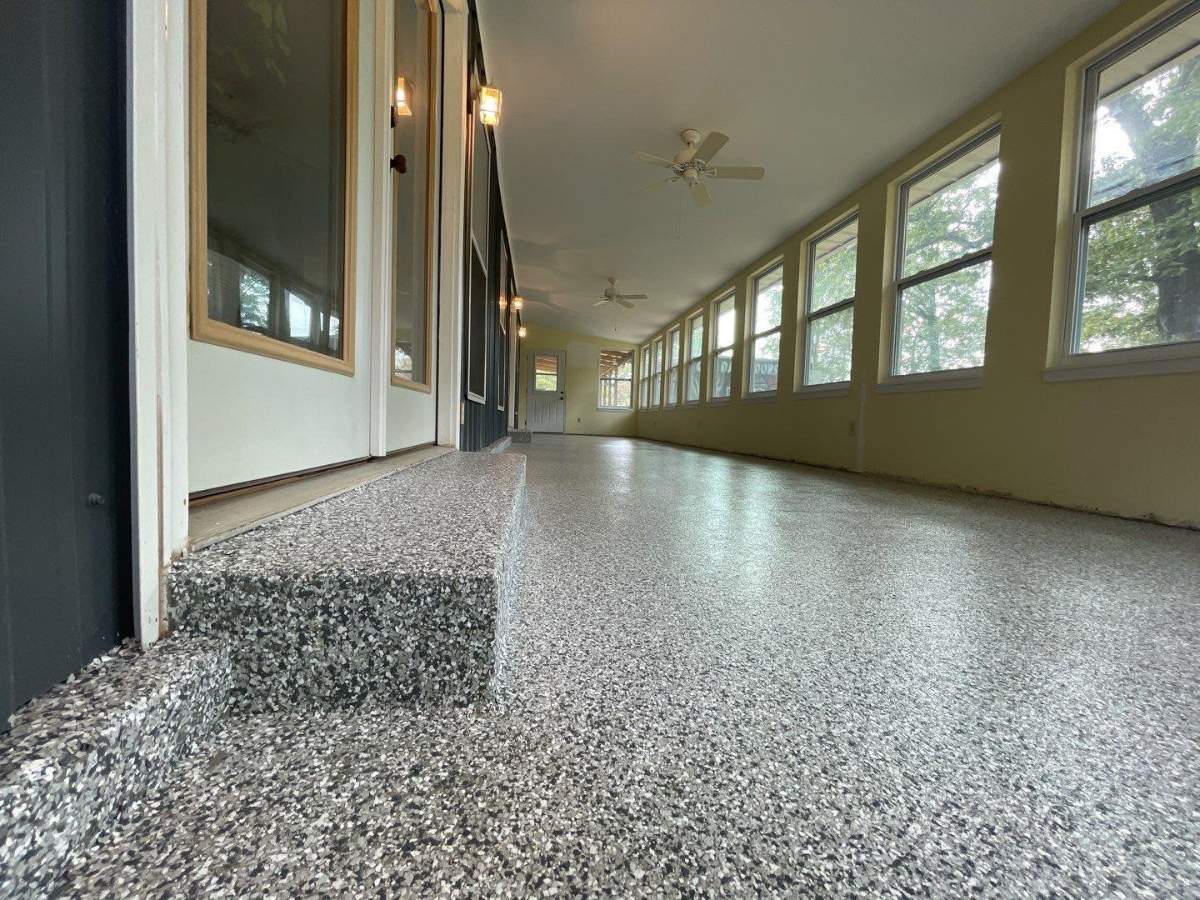
Modern patio coatings come in a wide range of textures, colors, and finishes. You can achieve the look of stone, tile, or wood grain—without the fragility of stamped concrete. TSR Concrete Coatings, a leading Tacoma WA concrete coating company, installs systems specifically engineered to handle the demands of the Pacific Northwest.
Key Benefits of Patio Coatings for Tacoma Homes
Durability in wet conditions: Quality patio coatings are water-resistant and flexible, which means they handle Tacoma's rain and temperature swings far better than stamped concrete. They won't crack from freeze-thaw cycles the way raw concrete does.
Slip resistance: This is a big one for wet climates. Patio coatings can be finished with textured surfaces that provide traction even in heavy rain—an important safety feature for families with kids or elderly members.
Low maintenance: Once installed, a coated surface is easy to clean and doesn't require regular resealing. An occasional wash-down keeps it looking fresh.
Design versatility: Want the look of Spanish tile? Natural slate? A solid color that matches your home's exterior? Patio coatings can deliver all of it, and adjustments are far easier than with stamped concrete.
Cost-effective over time: While the upfront cost of patio coatings is comparable to stamped concrete, the long-term savings are significant. Fewer repairs, no resealing cycles, and longer surface life add up quickly.
Stamped Concrete vs. Patio Coatings: A Side-by-Side Comparison
|
Feature |
Stamped Concrete |
Patio Coatings |
|---|---|---|
|
Upfront Cost |
Moderate–High |
Moderate |
|
Maintenance |
High (reseal every 2–3 yrs) |
Low |
|
Crack Resistance |
Low in wet/cold climates |
High |
|
Slip Resistance |
Low when wet |
High (textured options) |
|
Repairability |
Difficult |
Easy |
|
Design Options |
Limited by mold patterns |
Highly customizable |
|
Lifespan (Tacoma) |
5–10 years with upkeep |
15+ years |
The numbers speak for themselves. For Tacoma homeowners who want lasting value without constant maintenance, patio coatings are the stronger investment.
Which Option Is Right for Your Tacoma Patio?
The honest answer depends on your priorities—but context matters.
Choose stamped concrete if you're working on a brand-new pour, your budget is fixed, and you're prepared to commit to a regular resealing schedule. It can be a reasonable option in covered patio areas that see limited rain exposure.
Choose patio coatings if you want a surface that performs reliably in Tacoma's climate, requires minimal upkeep, and gives you more design flexibility. They're especially well-suited for open patios, pool decks, and any surface that sees regular foot traffic in wet conditions.
For most Tacoma homeowners, patio coatings are the practical, long-term choice. TSR Concrete Coatings has helped hundreds of local homeowners upgrade their outdoor surfaces with coating systems designed to last—without the maintenance headaches.
Make the Right Call for Your Tacoma Patio
Stamped concrete looks great in photos. But in Tacoma's real-world conditions—wet, variable, and unforgiving on rigid surfaces—it often falls short of expectations within just a few years.
Patio coatings offer a smarter path forward: better durability, lower maintenance, safer surfaces, and design options that rival anything stamped concrete can achieve. When installed by an experienced Tacoma WA concrete coating company like TSR Concrete Coatings, the results speak for themselves.
Ready to upgrade your patio? Contact TSR Concrete Coatings today for a free consultation and find out which coating system is right for your home.
Frequently Asked Questions
Can patio coatings be applied over existing stamped concrete?
Yes. In most cases, patio coatings can be applied directly over existing stamped concrete surfaces, provided the slab is structurally sound. TSR Concrete Coatings will assess your current surface before recommending a system.
How long do patio coatings last in Tacoma's climate?
With proper installation, high-quality patio coatings typically last 15 years or more in the Pacific Northwest. Tacoma's wet conditions are well-suited to polymer-based coating systems, which are designed to flex with temperature changes rather than crack.
Is stamped concrete slippery when wet?
Yes. Stamped concrete can become slippery when wet, particularly if the sealant has worn down. This is a common safety concern in Tacoma, where rain is frequent. Patio coatings with textured finishes are a safer alternative.
How much do patio coatings cost compared to stamped concrete?
Costs vary based on square footage, surface condition, and chosen finish. Generally, patio coatings and stamped concrete are comparable upfront—but patio coatings tend to cost less over time due to lower maintenance requirements. Contact TSR Concrete Coatings for a detailed quote.
How long does it take to install patio coatings?
Most residential patio coating projects are completed within 1–2 days. Cure time varies by product, but most surfaces are ready for light use within 24 hours of application.