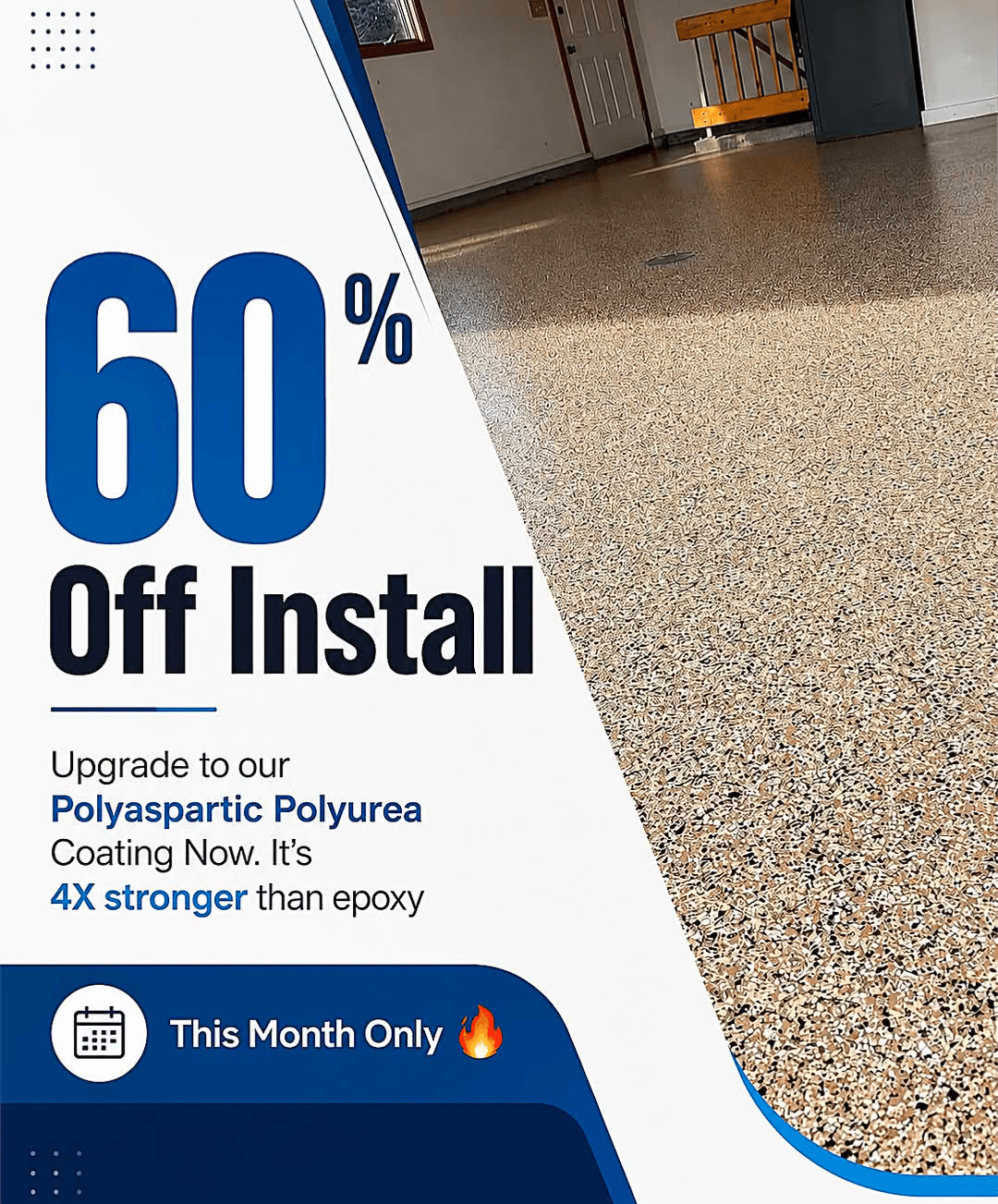
Quick answer: Hot tire pickup happens when warm tires bond to a weak garage floor coating and peel it away as you drive off. Polyaspartic coatings prevent this because they cure into a flexible, chemically stable surface that resists heat, adhesion loss, and lifting—making them one of the most durable garage floor coatings available.
You park your car after a long drive. The tires are hot. A few hours later, you pull out of the garage and notice patches of your once-flawless floor stuck to your tires. Frustrating, right? This problem is called hot tire pickup, and it's one of the most common reasons homeowners in Wisconsin end up replacing their garage floors.
The good news? It's completely preventable. In this post, TSR Concrete Coatings breaks down exactly why hot tire pickup happens, which coatings fail, and why polyaspartic garage floor coatings are the smart, long-term fix.
Key Takeaways
- Hot tire pickup occurs when heat from your tires weakens the bond between your garage floor and its coating, causing the coating to peel or lift.
- Cheap epoxy and DIY kits are the most common culprits, since they lack the flexibility and heat resistance needed to withstand hot tires.
- Polyaspartic garage floor coatings in Madison WI resist heat, chemicals, and adhesion loss—making them the most reliable way to prevent hot tire pickup for good.
What Is Hot Tire Pickup?
Hot tire pickup is exactly what it sounds like. When you drive, friction heats up your tires. Those warm tires then sit on your garage floor and press down with the full weight of your vehicle. If your floor coating isn't strong enough, the heat softens it just enough for the tire to grab hold. When you drive away, the coating peels up with the tire.
The result is a patchy, damaged floor that looks worse with every trip. It's a slow problem that tends to sneak up on homeowners, especially during warm months or after highway driving.
Why Does Hot Tire Pickup Happen?
The core issue comes down to adhesion and heat resistance. Two things need to be true for a coating to fail this way:
- The tires get hot enough to soften the coating. Tires can reach well over 100°F after normal driving.
- The coating can't handle the heat or the weight. Weaker coatings become soft and sticky, which lets the tire bond to the surface.
Several factors make this worse:
Poor Surface Preparation
If a garage floor isn't properly cleaned, ground, and profiled before coating, the bond between the concrete and the coating is weak from day one. A weak bond peels easily—hot tires or not.
Low-Quality or DIY Coatings
Big-box store epoxy kits are the biggest offenders. These products are thin, cure slowly, and stay soft compared to professional-grade options. They simply weren't built to handle the heat and pressure of a daily driver.
Standard Epoxy Coatings
Even professionally installed epoxy can be vulnerable. Epoxy is rigid and doesn't flex well under temperature changes. Over time, that rigidity combined with heat exposure leads to lifting and peeling.
Why Epoxy Alone Often Fails
Epoxy has been the go-to garage floor solution for decades, and it does have benefits. It's affordable and creates a hard surface. But epoxy has real weaknesses when it comes to hot tire pickup.
Epoxy cures rigid, not flexible. When your floor heats and cools throughout the day, the coating expands and contracts. A rigid coating handles this poorly, developing tiny stress points that eventually give way. Add hot tires to the mix, and you've got the perfect recipe for peeling.
Epoxy is also more sensitive to UV exposure and chemicals like oil, gasoline, and road salt—all common in a Wisconsin garage.
How Polyaspartic Coatings Prevent Hot Tire Pickup
Polyaspartic coatings solve the problem at its root. Here's why they're the better choice for Wisconsin garages:
They Stay Flexible
Unlike rigid epoxy, polyaspartic coatings cure into a flexible yet tough surface. They move with your floor as temperatures change instead of cracking under stress. That flexibility means hot tires can't grab and peel the coating.
They Resist Heat
Polyaspartic coatings are built to handle high temperatures without softening. When your hot tires sit on the floor, the coating stays firm and bonded—no sticking, no lifting.
They Bond Deeply
When installed by professionals, polyaspartic coatings are paired with thorough surface preparation. This creates a bond so strong that peeling becomes a non-issue. The coating becomes part of the floor rather than a layer sitting on top of it.
They Handle Wisconsin Winters
Road salt, snowmelt, and freezing temperatures are hard on garage floors. Polyaspartic garage floor coatings resist chemicals and UV exposure, so they keep looking great year-round.
Are Polyaspartic Coatings Worth the Investment?
Choose polyaspartic coatings if long-term durability matters more to you than the lowest upfront price. While a DIY epoxy kit costs less initially, most homeowners end up recoating or replacing it within a few years—especially once hot tire pickup sets in.
Polyaspartic coatings cost more upfront but last significantly longer, cure faster (often in a single day), and require little maintenance. For homeowners who want a floor they can install once and forget about, polyaspartic is the clear winner.
If budget is your only concern and you rarely park a vehicle inside, a basic coating might be enough. But for anyone parking a daily driver in the garage, polyaspartic is the smarter long-term choice.
Protect Your Garage Floor for Good
Hot tire pickup isn't just an eyesore—it's a sign your garage floor coating wasn't built to last. The fix is simpler than you might think. With proper surface preparation and a professional polyaspartic coating, you can enjoy a floor that stays smooth, bonded, and beautiful for years.
If you're dealing with peeling floors or want to prevent the problem before it starts, TSR Concrete Coatings specializes in professional-grade garage floor coatings in Madison WI. Reach out today for a free quote and give your garage the durable finish it deserves.
Frequently Asked Questions
What causes hot tire pickup on garage floors?
Hot tire pickup is caused by heat from your tires softening a weak floor coating. When the coating can't handle the heat and pressure, it bonds to the tire and peels away when you drive off. Poor surface prep and low-quality coatings are the most common reasons.
Can hot tire pickup be repaired?
Yes, but repairs are often temporary if the underlying coating is weak. The most reliable fix is to remove the failing coating, properly prepare the concrete, and install a durable polyaspartic coating that resists heat and peeling.
How long do polyaspartic garage floor coatings last?
When professionally installed, polyaspartic coatings can last 15 to 20 years or more. Their flexibility, heat resistance, and chemical resistance make them far more durable than standard epoxy.
Are polyaspartic coatings better than epoxy for Wisconsin garages?
Yes. Polyaspartic coatings handle temperature swings, road salt, and UV exposure much better than epoxy. For Wisconsin homeowners dealing with harsh winters, they're the more reliable long-term option.
How much do polyaspartic garage floor coatings cost in Madison, WI?
Costs vary based on garage size, floor condition, and prep work required. While polyaspartic coatings cost more than DIY epoxy kits upfront, they save money over time by avoiding recoats and repairs. Contact TSR Concrete Coatings for a free, customized quote.